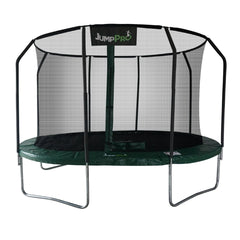
In-ground or above-ground trampoline: which is better?
In-ground looks neater, while above-ground is easier to fit and move. We compare both so you can pick the right one for your garden.
 The Jump Hub
powered by

 WhatsApp
 Facebook
 LinkedIn

On this page
The short answer
An in-ground trampoline suits a permanent garden where tidy looks and easy access matter most, while an above-ground model is simpler and more flexible.
- Looks: In-ground blends into the lawn; above-ground is more visible.
- Installation: In-ground needs excavation and drainage planning; above-ground is simpler to install.
- Access: In-ground is easier to step onto; above-ground needs a ladder or careful mounting.
- Moving: Above-ground can be dismantled and relocated; in-ground leaves a committed hole.
Your trampoline’s own manual always comes first.
It is easy to picture the trampoline looking perfect in the garden, then worry about spending money on the wrong type. Digging up the lawn for an in-ground model is a bigger commitment than assembling a frame above ground.
Here’s how the two compare in everyday family use, so you can weigh up the garden, the ground, and how long you expect to stay.
How do in-ground and above-ground trampolines compare?
| What matters | In-ground trampoline | Above-ground trampoline |
|---|---|---|
| Looks | Sits close to lawn level and blends into the garden. | More visible, with a raised frame and enclosure. |
| Access for children | Mat is at ground level, which can be easier for younger children to reach. | Needs a ladder or careful mounting onto the raised frame. |
| Digging work | Requires a pit, with retaining walls or an anchor kit depending on the model. | No trampoline pit to dig, so installation is simpler. |
| Cost | Groundworks and labour add to the overall cost. | Usually less ground preparation, so it is often cheaper overall. |
| Drainage | Needs planning for rainwater and the garden’s soil conditions. | No pit to collect water beneath the trampoline. |
| Moving or relocating | The hole makes it a long-term fixture, even if the trampoline can be removed. | Can be dismantled and relocated. |
| Maintenance access | Reaching the frame, springs, and underside can mean working into the pit. | Parts are generally easier to see and reach. |
The garden’s soil and drainage can matter as much as the trampoline itself. If your garden holds water, check the manufacturer’s installation guidance before committing to an in-ground model.
Which type looks better in a garden?
If you want the trampoline to be less prominent, in-ground has the advantage. Its mat sits near lawn level, so the garden can feel more open and the equipment blends into the surroundings.

An above-ground trampoline is more noticeable because of its frame, legs, and enclosure. But you can move it if you want to change the garden layout or take it with you when you move house.
Neither is the right choice for every garden. Think about whether a tidy, permanent position matters more to you than flexibility.
Is an in-ground trampoline easier for children to use?
With an in-ground model, the mat is at ground level, making it easier for younger children to step on and off. That can be handy for little legs, but it does not remove the need for supervision or safe play.
An above-ground trampoline is raised, so children need to use its ladder if one is supplied or recommended. Follow the manufacturer’s guidance for safe access, and discourage climbing on the frame or enclosure.

Both types need about 1m all the way round, enough to walk round it safely. Keep that space free from fences, walls, trees, sheds, and other obstacles, and check the manual for any additional clearance instructions.
How much work does installation involve?
An above-ground trampoline is usually the simpler option to install. You assemble it on a suitable level surface, following the instructions for the exact model.
An in-ground trampoline needs more planning before the trampoline is assembled. The work can include digging a pit, preparing the sides, and fitting retaining walls or an anchor kit, depending on the model. Excavation and other groundworks may also mean extra labour.
There is no single pit depth that suits every trampoline. The shape and dimensions depend on the model, so use its own installation guide rather than a general diagram. Do not assume a standard above-ground trampoline can be buried. Only choose a model designed for in-ground installation.
What should I know about drainage?
Water needs somewhere to go when it rains. An in-ground trampoline pit can collect water, so plan drainage before digging. Depending on the site and the manufacturer’s instructions, this may involve a soakaway or a drainage layer.

Clay soil can be particularly tricky because water may drain away slowly. A waterlogged pit can damage the installation over time and shorten its useful life. If the ground regularly stays wet, get advice about the site and drainage before you decide.
An above-ground trampoline avoids the same pit-drainage question. You still need to install it according to its manual and check that the site is suitable.
Which type is easier to move and maintain?
An above-ground trampoline can be dismantled and relocated, making it more practical if you move house or change your garden layout. The frame and other parts are also easier to see and reach during routine checks.
An in-ground trampoline is effectively a permanent garden feature. Even if you remove the trampoline, the hole remains to deal with. Checking its springs, frame, and underside may mean lifting or reaching down into the pit.
For either type, check the manual for inspection and care instructions. Regularly looking over the frame, mat, springs, and enclosure helps you spot wear or damage before use.
Which should you choose?
Choose in-ground if your priority is a tidier look, ground-level access, and a permanent position. It is best considered when you are prepared for digging, drainage planning, and less convenient access underneath.
Choose above-ground if you want a simpler installation and the option to move the trampoline later. It is also the more straightforward choice if you would rather avoid a pit and its drainage requirements.

5-year frame warranty
13ft Salta Black Royal Baseground Round Trampoline with Enclosure
Sits flush with a lawn of about 6 x 6m
£859.99
90-day Bounce Back Promise

Free ladder included
12ft JumpPRO® Xcel Round Trampoline with Enclosure & Free Ladder
Fits a lawn of about 5.7 x 5.7m
£389.99
90-day Bounce Back Promise
In short, in-ground wins on appearance and easy access. Above-ground wins on simpler installation, drainage, and flexibility. For either type, plan for about 1m all the way round.
Not sure whether your garden can fit a trampoline safely? Try the garden size checker, or contact the team with a photo and your garden measurements. For in-ground installation, check the exact model’s instructions before you dig.


Frequently asked questions
How deep do you dig for an in-ground trampoline?
It depends on the trampoline model and pit design. Check the manufacturer’s guide for the required depth and shape, and follow it rather than relying on a general measurement.
Do in-ground trampolines drain well?
They drain well only when drainage is planned for the site and model. A soakaway or drainage layer may be needed, especially in clay soil, where water can drain slowly.
Which is cheaper overall?
An above-ground trampoline is usually cheaper overall because it does not need the same digging and groundworks. The total cost depends on your garden and chosen model, so compare the full installation requirements.
Can an above-ground trampoline be sunk later?
Generally, no. Most above-ground trampolines are not designed to be buried, so check with the manufacturer before considering any changes to the installation.
Which lasts longer?
It depends more on care and drainage than on whether a trampoline is in-ground or above-ground. Good maintenance matters for both, and a poorly drained in-ground pit can cause problems over time.
The best choice is the one that suits your garden and your plans: in-ground for a neat, permanent fit, or above-ground for a simpler setup you can move.
Know another trampoline family? Send them this guide.
The Jump Hub is powered by
JumpPRO® is our own range of garden trampolines, designed by the trampolines.co.uk team after helping UK families choose since 2004. Every one is tested to EN 71-14, the European standard for garden trampolines, and they've been picked by The Independent's testers three years running. The same team writes every Jump Hub guide, so if this one didn't answer your question, give us a call.
Keep reading
More ways to keep it bouncing
 Will a trampoline fit in your garden? The measuring guideA tape measure, a marked-out footprint, and a few minutes can tell you whether a trampoline will fit safely.Read the guide
 Akrobat XcityX: the last trampoline you'll ever need to buy?Akrobat's biggest trampoline is built to be the last one you buy. Here's what you get, who it suits, whether it fits your garden, and if it's worth it.Read the guide
 Do trampolines need anchors in the UK?Not every trampoline needs anchors, but exposed gardens and stormy weather make a tie-down kit worth considering. Here’s how to decide.Read the guide

Keep them bouncing all year round
Covers, tie-down kits, and trampoline socks, so it's ready for every dry, sunny day of the year.
90-day Bounce Back PromiseSame-day dispatch by 3pm
“Really great product my children love it.”